Showing posts with label Economic Systems. Show all posts

Thursday, September 22, 2022

The West Mimics Mao, Takes a Green Leap Forward

My takeaway is "Look before you leap".

Not everyone is enthused about how governments are pushing green energy.

"One of the essential lessons from China’s Great Leap Forward is that catastrophic failures inevitably follow from politicians’ insistence on ignoring reason, logic, truth and economics. Europe’s current energy crisis, California’s continuing power outages and Sri Lanka’s food shortages are all warning signs. The Green Leap Forward has set humanity on a fast track to another man-made catastrophe." WSJ, Sept. 2022

Another opinion in today's WSJ bemoans the proclivity of Telsa batteries to overheat and catch fire. Who knew?

Thursday, May 5, 2022

Preaching to the Choir


"The overwhelming majority of economists agree on a few things: secure, well-defined property rights are a vital ingredient of growth; people respond to incentives; the economy is not zero-sum; sustainable growth comes from innovations that enable us to make more from less; some trade-off between equality and growth is necessary because innovation often makes some people rich, and they must be rewarded for their risk-taking and talents."

Allison Schrager, A review of A Brief History of Equality, by Thomas Piketty
April 29, 2022

Saturday, April 30, 2022

America Needs a Return to First Principles

"The authors credit the 'micro-foundations of the economy' for having driven living standards “to heights unimaginable at the nation’s founding. Those foundations—Mr. Cogan’s first principles—are private property rights, the rule of law, free and competitive markets, and limited government. The last includes “subsidiarity,” meaning that no central authority should do what can be done by a more local body, and no public institution should do what can be left to private enterprise. 

'When you think about what drives America’s GDP,' Mr. Cogan says, 'it’s millions of individuals working, investing, saving and making allocative decisions with these microfoundations in place.'

"The authors identify as the 'sine qua non' of American prosperity the 'three I’s”—ideas, individuals and institutions ...  'a sound economic governance framework liberates the individual, encourages the promulgation of new ideas, and ensures the proper functioning of institutions.' A policy that offends any of these elements—by restricting the individual, stifling ideas or letting institutions stray beyond their proper limits—is likely to harm the economy." (Tunku Varadarajan, WSJ, April 2022).

For more, visit Reinvigorating Economic Governance.

Friday, April 29, 2022

This lesson should be the main one taught by economics

"The main lesson of economics is the mutual gains from trade and the peaceful social cooperation under the division of labor that a modern commercial society engenders" Peter J. Boettke, “Liberalism, Socialism, and Our Future,” The Struggle for a Better World (2021).

So says Don Boudreaux.

Monday, March 28, 2022

A Wide‐​Ranging Book for Non‐​Economists and Economists

David R. Henderson (Regulation, March 2022) reviews Steven Rhoads, The Economist’s View of the World, revised 2021. The review applauds the chapters on:

  1. Opportunity Cost
  2. Marginalism
  3. Incentives
  4. Government vs. Free Markets and
  5. Safety Information.

Sunday, March 13, 2022

The state is to be shunned as an inefficient instrument for achieving any given objective

Melvin Reder (Chicago Economics: Permanence and Change, March 1982) reports that the Chicago economists had a "generally adverse view of government intervention.

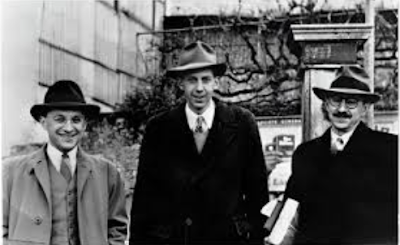
Pictured to the right are Milton Friedman (1912-2006), George Stigler (1911-1991), and Aaron Director (1901-2004) in 1947, at the first meeting of the Mont Pelerin Society. 

Monday, February 28, 2022

Both Sides: The Free Market

"This Both Sides installment presents two viewpoints on free market systems. First, Richard Wolff posits that, from a historic standpoint, the free market has never actually existed because regulations are always necessary due to naturally introduced, undesirable affects. On the other side, Milton Friedman puts forward that free voluntary exchange, based upon the principle of mutual benefit, leads to a market that averts a concentration of power and prevents people from doing harm" (Stossel in the Classroom, Feb. 2022).

Here are some comments. 

  1. The examples Wolff presents to show that regulation follows whenever a market appears are not compelling.
    1. Labor contracts existed for 100s of years before governments passed minimum wage legislation.
    2. Public utility regulation creates the very monopolies he condemns.
    3. He conflates people willing to pay the most for an ice cream cone with people with the most money. Not all "rich" people are willing to pay a lot for a cone and some "poor" people are. Do not confuse what I just wrote with this next statement: the market system allocates more goods and services to rich people than to poor people.
    4. He ignores that positive effects of the increase in the price of ice cream cones.
      1. The quantity supplied increases. (He misuses the terms "demand" and "supply".
      2. Profits earned by the producers encourages entry of alternative products, especially of products that cater to consumers being priced out of the market.
      3. The favor that the market shows to the rich encourages production activities and investment in physical and human assets. That the market system allocates more goods and services to rich people than to poor people may be a feature, not a flaw.
  2. Friedman states at the beginning of his talk that no actual system conforms completely to free enterprise.
  3. Friedman spends most of his time talking about how the market system is but one example of order arising spontaneously when individuals cooperate freely and without coercion. .

Monday, February 7, 2022

Wealth Is Knowledge


More wisdom from Andy Kessler and George Gilder (WSJ, Feb. 2022). 

"How to create lasting wealth is surprisingly simple: Do more with less."

"'Capitalism is not chiefly an incentive system, where entrepreneurs act in rote response to rewards and punishments like in a Skinner Box. It’s an information system governed by the unveiling of surprising truths, innovation. If the creativity of entrepreneurs wasn’t a surprise, socialist planning would work.'"

"'You can keep your wealth only if you are willing to give it to others.' Think about that. If you have knowledge and capital, the only way to produce wealth is to invest in things that lower costs to consumers and slide down new learning curves. In effect, by providing something they will find productive—the iPhone, artificial-intelligence software—entrepreneurs expand their customers’ wealth. This is what I call societal wealth. Capitalism isn’t greedy, it is the sincerest form of charity." 


Friday, November 19, 2021

The Iron Lady explains it all in her own words.

How I Privatised Britain and Rebooted the "Enterprise Society" is Margaret Thatcher's account of how and why she reduced government control over the economy in Britain (Reason, April 2013). My understanding is that the standard of living increased substantially after her actions. Here are some money quotes.

  1. All too often the state is tempted into activities to which it is either ill-suited or which are beyond its capabilities.

    Perhaps the greatest of these temptations is government's desire to concentrate economic power in its own hands. It begins to believe that it knows how to manage business. But let me tell you, it doesn't as we discovered in Britain in the 1970s when nationalisation and prices and incomes policy together deprived management of the ability to manage. 

  2. privatisation shrinks the power of the state and free enterprise enlarges the power of the people.

  3. to create a genuine market in a state you have to take the state out of the market.

Monday, November 1, 2021

Experts v. Markets

"Who better to boss us around than the “expert class”? But markets, with billions of price signals, always know better than 537 elected politicians" (Kessler, WSJ,Nov. 2021).

Friday, October 15, 2021

Natural-Gas Shortage Sets Off Scramble Ahead of Winter

This article describes what happens when increases in demand lead to shortages of natural gas (WSJ, Oct. 2021). Some money quotes follow.

  1. "Buyers in Europe, Asia and Latin America are competing for limited supplies of gas, racing to fill tanks and caverns with the fuel before winter hits the Northern Hemisphere.

    "Natural gas stocks are alarmingly low around the world, and prices in most places have never been higher after surging to new records in Europe and Asia this week. Demand has jumped as economies have bounced back from pandemic shutdowns ..."
  2. "Shippers are diverting tankers to the highest bidder, ..."

Monday, October 11, 2021


"In any case, private boondoggles have one big advantage over public ones: they don’t force uninvolved taxpayers to pay for them" (Cafe Hayek, Oct 2021).

Tuesday, September 7, 2021

New York Trashes Landlords Again

This WSJ editorial raises questions about the security of landlord's property rights (WSJ, Sept. 2021). What exactly does the landlord purchase when the government can later forbid evictions or increases in rent? The restrictions decrease the income the landlord expected to earn. Does the inability to use the property as desired and decrease in income constitute "government seizure of private property for public use without just compensation"?

Do restrictions on evictions and increases in rent increase the incentive to become a landlord or decrease the incentive? How would the change affect the future availability of rental housing?

Friday, August 27, 2021

Mask mandate v voluntary exchange

Professors at UT-Austin may pay students to where masks (Aug 2021). It illustrates two different ways to get people to wear masks.

  1. A mask mandate. Here, the university acts as the ruler and coerces people to wear masks. VCU, where I teach, requires masks in all indoor settings and encourages them outdoors when social distancing is not possible.
  2. A market for wearing masks. Here, someone pays people to wear masks. Adjustments in the price could increase or decrease compliance. An important question, of course, is, "Who pays the price?" Professors at UT-Austin think that the university should.
Coase discussed the notion that someone should pay someone else to reduce a negative externality when he developed what is now called the Coase Theorem.

Tuesday, July 6, 2021

Banning Payday Loans Harms Borrowers

Alex Tabarrok reviews a paper in the NBER that finds that most common regulations of payday loans make borrowers worse off. (MRU, July 2021) Here is a money quote.

"It’s no surprise that people who leave free money on the table have planning problems and need to borrow, it’s just that preventing them from borrowing doesn’t make them better off."

Saturday, May 29, 2021

Monday, February 15, 2021

What happens with the government rations a good

People complete to obtain the good when government determines who receives it first.

  1. They lobby to move up the priority list (WSJ, Feb. 2021).
  2. They use influence and connections to "cut" in line (WSJ, Feb. 2021).

Friday, December 25, 2020

Markets v. Command and Control = Freedom v. Coercion

"Most economic activity requires coordinating the activity of vast numbers of people. New Yorkers have bread on their tables thanks to the coordinated activity of farmers, bakers, truckers, the producers of fertilizers, pesticides, and tractors, the mechanics who maintain the tractors and the delivery trucks, and literally thousands of others. There are only two ways to organize that activity: Through the anonymous market place, where individuals respond to price signals (so that an increase in the demand for bread leads ultimately to an increase in demand for tractor maintenance, leading mechanics to voluntarily work overtime), or through top-down direction – in other words, coercion. In the latter case, we are all subject to the whims and the prejudices of the directors. That leaves the market as the only economic system conducive to freedom"(Friedman, "Capitalism and Freedom", The Essential Milton Friedman, p. 39, emphasis added).